What are you doing now?
PLACA EPA

WELCOME
Monday, 25 April 2016
Wednesday, 6 April 2016
Learn English Through Story ★ Subtitles: London (Levels 1) (Factfiles)
If you have some time listen and read this book.
And above all Enjoy London !!!!
Let's go to the Theatre 2016

Next Thursday 7th we are going to the theatre!!!
We are going to see .........

What is the story about? What do we know about the author?
Read the following PPT
Let's go to the theatre 2016 Pygmalion from teteg662
Watch the following scene ...
Enjoy yourselves and let me know your opinion!
Watch the following scene ...
"The rain in Spain stays mainly in the plain"
Enjoy yourselves and let me know your opinion!
Sunday, 28 February 2016
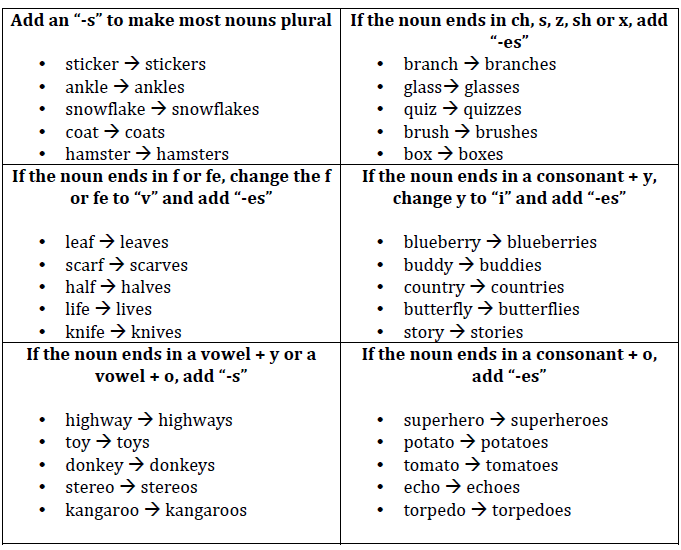
PLURAL NOUNS
Have a look at the rules!
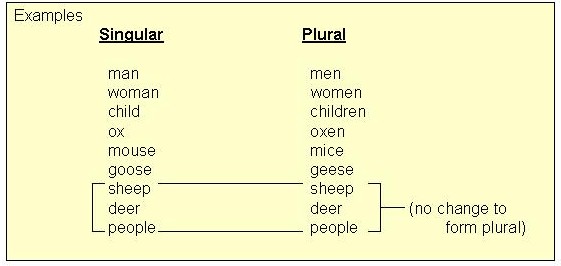
Irregular nouns
Solution to the exercises:
http://www.grammar.cl/exercises/plural-nouns.pdf
Plural Nouns
A) Change each o f the following nouns
below into plural nouns.
a. Books
b. Tables
c. Days
d. Cars
B) Change each o f the following nouns
below into plural nouns.
a. Watches
b. Foxes
c. Glasses
d. Quizzes
e. Classes
f.
Busses
C) Change each o f the following nouns
below into plural nouns.
a. Babies
b. Bodies
c. Monkeys
d. Parties
e. Dictionaries
f.
Cities
D) Change each o f the following nouns
below into plural nouns.
a. Calves / calfs
b. Hoofs/ hooves
c. Elfs/ elves
d. Dwarfs/ dwarves
e. Thiefs / thieves
f.
Loafs
/ loaves
E) Change each o f the following nouns
below into plural nouns.
a. Potatoes
b. Geese
c. Tomatoes
d. House
e. Cherries
f.
Meese
g. Deer
h. Oxen
i.
Mosquitoes
j.
Sheep
k. Heroes
l.
boxes
F) Change each o f the following nouns
below into plural nouns.
a. Paw is to cat as foot is to human.
b. Key is to door as password is to
computer.
c. Girl is to boy as woman to man.
d. Goose is to flock as dog is to pack.
Monday, 22 February 2016
Happy Birthday Maria.
Once more Maria has brought to our class some delicious "flowers" because it is her birthday.
So we want to wish you a happy birthday with this song:

So we want to wish you a happy birthday with this song:

Thank you Maria !
In this PowerPoint you can find more recipes !
Monday, 15 February 2016
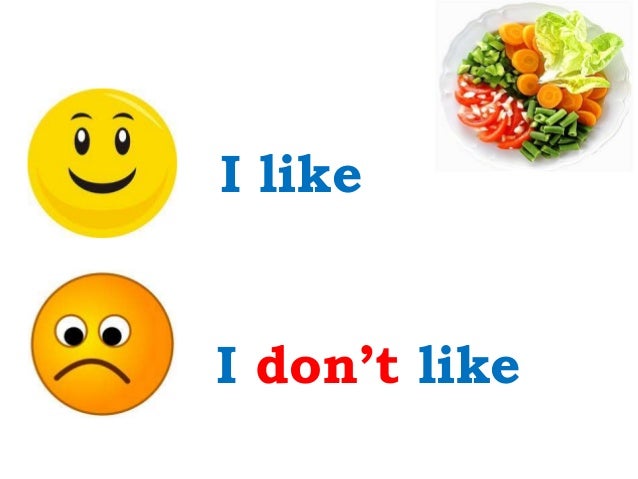
I like / I don't like


Do you like chocolate?
I like black chocolate but I don't like white chocolate.
Do you like chicken?
Yes, I do. I like chicken very much but I like rabbit a little.

No, he doesn't.
Does he like carrots?
No, he doesn't.
Does he like brocholi?
No, he doesn't.
Does he like green beans?
No, he doesn't

Does he like fast food?
Yes, he does.
Does he like chicken?
Yes, he does.
Does he like pizza?
Yes, he does.
Does he like hamburgers?
Yes, he does.
A DIALOGUE
Jenny: There's a new restaurant near my
house. Do you want to go there?
Jenny: Oh, I really want a hamburger and some chips. The restaurant has got very good food.
Tom: No, I don’t. At the moment, I’m
eating an apple and a yoghurt. I am not hungry.
Jenny: Oh, I really want a hamburger and some chips. The restaurant has got very good food.
Tom: Fast food isn’t good for you. I can make
you an egg sandwich or a salad.
Jenny: No, thank you. I don’t want any salad
or sandwiches. I really want some fast food.
Monday, 25 January 2016



Monday, 18 January 2016
Monday, 14 December 2015
Thanksgiving and Black Friday
This is the PowerPoint presentation I used in class. I found it in the Internet and adapted it for you. Try to remember some of the vocabulary we learnt.
Thanksgiving and Black Friday from teteg662
By the way, some more vocabulary Squash


By the way, some more vocabulary Squash

and nuts


Try to read more about Thanksgiving and other traditions in English!
Sunday, 13 December 2015
It's Christmas time!!!!!
Let's read this powerpoint!!
Christmas presentation from Xavi Malo
Be careful! There is a mistake ( error) in this presentation!!
When we are talking about cakes, tarts, cookies, biscuits, gelatins, pastries,
ice- creams, pies,puddings, custards, and sweet soups, we mean desserts ((/dɨˈzɜrt/)) and not a desert ( /dɪˈz3ːt, ˈdezət/) or arid region.
And let's sing!!
Be careful! There is a mistake ( error) in this presentation!!
When we are talking about cakes, tarts, cookies, biscuits, gelatins, pastries,
ice- creams, pies,puddings, custards, and sweet soups, we mean desserts ((/dɨˈzɜrt/)) and not a desert ( /dɪˈz3ːt, ˈdezət/) or arid region.
And let's sing!!
Complete the lyrics!
http://masterkeyenglish.com/wp-content/uploads/2011/12/Santa-Claus-is-coming-to-town1.pdf
Sunday, 29 November 2015
Thanksgiving and Black Friday
Vocabulary

Questions related to the PowerPoint Presentation
Choose the correct answer:
1. What
is Thanksgiving?
a. A national
holiday b. An international holiday
2. When
is it celebrated in US? _____________of November.
a. On the
second Monday b. on the fourth Thursday
3. When
is it celebrated in Canada? _________of October
a. On the
second Monday b. on the fourth Thursday
4. Who
start this tradition?
a. The Native
Americans b. the Pilgrims
5. Why
do pilgrims die?
a. No food
and illnesses b. in wars
6. What
do Native Americans teach them?
a. To dance
and sing b. to survive
7. Why
do Pilgrims invite the Native Americans to their celebration?
a. To say
“thank you” b. to say “good bye”
8. What
is Americans’ favourite Thanksgiving meal?
a. Hamburgers b.
turkey
9. How
do Americans spend Thanksgiving?
a. With
their family and friends b. buying
10.
When is Black Friday?
a. After
Thanksgiving b. Before
Thanksgiving
11.
What do people do on Black
Friday?
a. Buy ,
buy & buy b. stay home
& watch TV
12.
Do other countries celebrate
“Black Friday”?
a. Yes,
they do. b. No, they
don’t.

Monday, 23 November 2015
What's your name? How do you spell it ? Where are you from?
Hello everybody!!
This is the video we used in our class. Watch it and repeat it as many times as you want.
Where are you from? Sing along!!!!!
This is the video we used in our class. Watch it and repeat it as many times as you want.
What is your job?
Where are you from? Sing along!!!!!
Saturday, 14 November 2015

Saturday, 7 November 2015
Halloween

Adults and
children celebrate Halloween on the 31 of October every year.
People
celebrate Halloween with parties and with various activities.
Some
Halloween activities:
- o Trick-or-treating
- o Halloween costume parties
- o Decorating and carving pumpkins into jack –o-lanterns
- o Lightning bonfires
- o Apple bobbing and divination games
- o Playing pranks
- o Visiting haunted houses
- o Telling scary stories
- o Watching horror films
Some Halloween vocabulary!!! And some
language review!!
And if you want to read the legend of Jack of the Lantern or Jack-o-lantern…..
Or sing along
with Marilyn Manson in This
is Halloween.
I hope you
enjoy yourselves!!!
Monday, 2 November 2015





Monday, 24 August 2015
Learning through theatre.
Foreign language teachers spend most of their time trying to adapt different materials found in text books, the Internet or all kind of material to their students. This is, we are always thinking about how I can use this or that in my classes.
The English Department in our school offers our students the opportunity to attend to an adapted theatre performance. Last year it was the turn of “A CHRISTMAS CHAROL”. This performance is an excuse to read the script and comment it, vocabulary exercises, comprehension exercises and some discussions too. We also learn something about the author and its time, trying to contextualize the learning of the language. As the student level is varied, the activities are also adapted to a beginner level. Of course, the outcome of those activities and the performance itself are a great success. Our students rate them quite high and they are aware that it is an excellent way of learning the language and its culture.
This school year, I suggested my students a representation of “THE STONE SOUP”. First I adapted the script to the number of the students and their level. Then we worked over it, reading, translating, and explaining any difficulties. We started rehearsing the play, first reading aloud and checking pronunciation, then practicing intonation and finally focusing on the performance itself. We did this during three months one day a week, and on our last class we made a performance and taped it. The play turned out to be a very motivating way of putting in practice language and grammar they had learnt during the course.
Furthermore, as students felt more relaxed and even those who are quiet shy felt more comfortable after rehearsing several times the final performance was very successful although not perfect. Pronunciation and intonation need to be improved, of course, but the development of the activity was excellent.
To conclude, theatre plays are an excellent way to learn a language because they give a context and a script, so students have to understand and learn the words, the plot and internalize the feelings but they do not need to produce new dialogues, which is very stressful for beginners. Once they feel comfortable with the script and the situations, the learner can focus on the non-verbal gestures, on pronunciation, and dramatization. When the process finishes they feel more self – secured and ready to perform in new situations and with new vocabulary.
Example
The English Department in our school offers our students the opportunity to attend to an adapted theatre performance. Last year it was the turn of “A CHRISTMAS CHAROL”. This performance is an excuse to read the script and comment it, vocabulary exercises, comprehension exercises and some discussions too. We also learn something about the author and its time, trying to contextualize the learning of the language. As the student level is varied, the activities are also adapted to a beginner level. Of course, the outcome of those activities and the performance itself are a great success. Our students rate them quite high and they are aware that it is an excellent way of learning the language and its culture.
This school year, I suggested my students a representation of “THE STONE SOUP”. First I adapted the script to the number of the students and their level. Then we worked over it, reading, translating, and explaining any difficulties. We started rehearsing the play, first reading aloud and checking pronunciation, then practicing intonation and finally focusing on the performance itself. We did this during three months one day a week, and on our last class we made a performance and taped it. The play turned out to be a very motivating way of putting in practice language and grammar they had learnt during the course.
Furthermore, as students felt more relaxed and even those who are quiet shy felt more comfortable after rehearsing several times the final performance was very successful although not perfect. Pronunciation and intonation need to be improved, of course, but the development of the activity was excellent.
To conclude, theatre plays are an excellent way to learn a language because they give a context and a script, so students have to understand and learn the words, the plot and internalize the feelings but they do not need to produce new dialogues, which is very stressful for beginners. Once they feel comfortable with the script and the situations, the learner can focus on the non-verbal gestures, on pronunciation, and dramatization. When the process finishes they feel more self – secured and ready to perform in new situations and with new vocabulary.
Example
The Stone Soup from teteg662
Thursday, 20 August 2015
Wednesday, 19 August 2015
Learning a language in later life: are you ever too old?
Learning a language when you
retire, as is the case with many people, it is at the beginning an exercise in personal
development / effort and improvement, and it is not easy at this age back to to
study hard.
The ability to learn is innate
because we all have brains ready to learn another language. "It is true
that at younger ages it is easier, but age must not be an obstacle to learning
languages like English, because adults have experience, they know the
grammatical structures and they are more simple lessons ".
The brain can be kept active through exercises / gym. Neurologists agree that the more the brain is used the less frequently are the failures in office. Learning a language is one of the most complete gymnastics, because memory is active and new connections are created when switching from one language to another.
In learning a language's, according to neurologists, the apparition of diseases such as Alzheimer's, etc ... is strengthened even delayed by the ability to concentrate.
Attending the course of English allowed me to cover a number of hours, meet people and "feel that we are never too old to learn."
By José V.
Subscribe to:
Posts (Atom)